Sunday, August 28, 2011

The Elusive Bill DeArango

I first encountered Bill DeArango during my early explorations of bebop – specifically, Dizzy Gillespie’s 1940s recordings for RCA Victor. The tune: Ol’ Man Rebop. The guitar solo blew me away. Who was that guy? DeArango had a relatively brief career, recording-wise. After he got out of the service in 1944, he hit 52nd Street and started gigging with the likes of Ben Webster, as chronicled in this Harvey Pekar comic. He quickly emerged as a leading bop guitarist, with Dizzy, Eddy “Lockjaw” Davis, and others.
DeArango recorded an album or two in the early 50s and then headed back to Cleveland, where he owned a music store, played with the local heavyweights, and explored freer kinds of jazz. His last album, with Joe Lovano, was issued on Gunther Schuller’s GM Records. Someone has started a Bill DeArango Web site that has a lot more information about the man and his music – and some amazing audio samples.
Here’s Ol’ Man Rebop and Jim Dawgs, a 1945 swinger led by Newark, NJ's own Ike Quebec, who's worth a post himself.


Sunday, August 14, 2011

Good Vibes (and Piano) from Detroit

One of the reasons I decided to reinvigorate this blog was a YouTube video of Terry Pollard. Pollard, a fine pianist and vibraphonist who emerged from the incredible explosion of jazz talent that was Detroit in the late 50s, was one of the few women to make her mark in the music during that period. After playing with many of the top musicians of the day, touring for several years with the vibist Terry Gibbs, and recording only one album as a leader, she returned to Detroit to raise a family and faded from the scene.


After her death in 2009, Terry Gibbs’ YouTube channel posted a video (below) of his quartet with Pollard on piano and in a terrific duet with Gibbs on vibes. It’s a demonstration of talent that ranks with that of Barry Harris Tommy Flanagan, two other acclaimed Detroit musicians of her era. It’s also a reminder that jazz can be fun and doesn’t need to take itself as seriously as it often does these days. And yes, that’s Steve Allen on piano during the vibes duet. From the YouTube comments, which are less idiotic than usual, it seems that Pollard was a fine person as well as a great musician.

Whatever negligent conglomerate owns the rights to Bethlehem Records should reissue her 1955 LP but, given the state of the music business, it may be up to Fresh Sound or one of the other Andorran labels to do it. Anyway, I’m glad we have this clip and a Euro reissue of The Terry Gibbs Quartet Featuring Terry Pollard  (kudos to Gibbs and Bethlehem for the original billing!) to keep Terry Pollard’s memory alive.


Saturday, August 6, 2011

Back at It

It’s been quite a while since I’ve done anything with this blog – press of time, other obligations, blah, blah, blah. I have been thinking about it, though. Up to now, I haven’t articulated a theme or governing principle to guide me (and you) as to exactly what I’m trying to do. I think I’ve zeroed in on that. I’m interested in keeping the memory of unsung musicians, authors, and events alive in a time where the overwhelming glut of information via the Internet, the concomitant apparent dumbing down of the media, and an accompanying publicity barrage for the worst (whose PR people are full of passionate, lucre-driven intensity). Okay, I do have a fondness for the obscure over the mainstream, but the mainstream seems pretty capable of taking care of itself, so why not? “Obscure” doesn’t mean untalented, unimportant, or ridiculous – anyway, it’s my blog and I’ll cry if I want to.

A relaunch demands a new name, so I’ve selected Lift the Bandstand! When Steve Lacy, the great soprano saxophonist, was gigging with Thelonious Monk, he jotted down Monk’s various utterances about music and life. “Lift the bandstand!” was his advice to Lacy and other musicians, and it seems to work for all kinds of other human efforts, so Lift the Bandstand! it is. I've also added a new look to go along with the new name.
To kick things off, here’s part of a performance by Lacy that really takes Monk’s advice to heart. The music is exciting and passionate, stemming from the jazz tradition and building from it. Lacy’s music is free but structured – he never abandons the music’s roots, even at his most abstract. Note: A lot of people don’t care for Irene Aebi’s vocals, but this one, at least, fits in seamlessly.

If you like where I’m going with the blog, or even if you don’t, please comment!

Sunday, October 24, 2010

The Blogger's Update


Well, it’s been a busy few months here at Stolen Moments world headquarters. I retired from my job at the Government Printing Office (GPO) at the beginning of July and was almost immediately hired back as a contractor, working three days a week to continue the Government Book Talk blog. Since it ramped up at the end of March, Government Book Talk has had almost 80,000 page views and acquired more than 900 subscribers. It’s also won a Silver Inkwell from the Washington DC chapter of the International Association of Business Communicators.

Then there’s the comic book. Last fall, our Managing Director asked me to create a script for a comic book about the history of printing. To me, it was just another writing job, but the results have gotten a lot of press:


http://voices.washingtonpost.com/federal-eye/2010/09/squeaks_the_mouse_channels_gut.html
(Ed O’Keefe’s Federal blog at the Post – he was kind enough to post the YouTube video done by GPO)

http://www.federalnewsradio.com/?nid=15&sid=2058315 (radio interview with me and Nick Crawford, who did the terrific art work.)

Well, enough shameless self-aggrandizement. Molly and I are expanding (we hope) our freelance editing and writing business, so “retirement” is not quite the word, at least not yet. We’ve been really busy for the last few months. Her major back surgery (scheduled for November 19) may slow us down, but we’re not looking at it from that angle. If it goes the way we think, she will be pain-free after years of increasingly difficult back problems and trying every other treatment under the sun.
Okay, end of sermon, as my 8th grade science teacher used to say. I have lots of jazz reviews planned, including a look at some of the great reissues of music recorded by the Japanese Why Not label in the 1970’s, a bunch of Prestige mainstream and soul jazz, and more. Keep looking at the skies!

Wednesday, June 16, 2010

Paquito and Mr. Jelly Lord

On Sunday evening, I attended the world premiere of Paquito D'Rivera's Jelly Roll Morton Latin Tinge Project. With D'Rivera on clarinet, Michael Philip Mossman as arranger, musical director and trumpeter, Akua Dixon's Quartette Indigo, Curacaoan percussionist Pernell Saturnino, and dancer Matye Vicens, this remarkable concert concept produced some really excellent music, not the MOR NEA grant-type stuff that often comes out of the arts world these days. The arrangements of Morton's unusual long-form compositions were executed with fire and precision. The band really started moving with Black Bottom Stomp, executing the complex lines with ease and panache. After sustained audience applause, an obviously pleased D'Rivera said, "You should be glad you came to the second concert. We finally got our sheet together!!" Other highlights included Morton's renowned piano solo piece Finger Buster and a rousing King Porter Stomp.

I was a little worried about having a dancer on the program, picturing some tedious modern dance fluttering, but Vicens, who comes out of the flamenco tradition, was an outstanding interpreter of the music -- it was a treat to watch her react to and explicate the sounds of the band. The verdict: A+!

Sunday, June 6, 2010

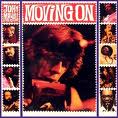
John Mayall: Moving On


I've been a huge fan of John Mayall's Moving On album for about 35 years. My old roommate Tom could tell you that. It was one of the albums he added to his tape system, and we played it a lot. I still have my vinyl, but it's now out on CD and well worth a listen. The liner notes have interesting comments by Mayall. Fascinatingly, although the original notes say "recorded live at the Whiskey A Go Go, Los Angeles, 10th July 1972", the real story is a little more complicated. It was recorded there originally but, according to Mayall, the tapes had a buzz that rendered the whole date unusable. He reassembled the band in the studio and recorded the whole album again, splicing in applause from the original tapes. As Mayall note wryly, "We didn't just decide to lift the audience from someone else's show, if you're wondering!"

I think this album is as good a way to get some people into jazz as Kind of Blue. With a lineup of Blue Mitchell, Clifford Solomon, Charles Owens, the legendary Fred Jackson, Ernie Watts, Freddy Robinson, and Victor Gaskin, all from the worlds of jazz and blues, plus Keef Hartley on drums, the music rocks and swings like a mother but also has moments of subtlety (check out the flute work of Charles Owens on Christmas 71). The recording culminates in a coruscating tenor solo by Ernie Watts on High Pressure Living. Blue Mitchell is superb throughout, and Freddy Robinson demonstrates his ability to play blues guitar in any setting.

You can find this CD for sale on Amazon, although I got mine via Dusty Groove, that indispensable source for obscure jazz, R & B, funk, and miscellaneous soulful sounds. For a taste of Moving On, go here.


Monday, April 5, 2010

The Sonny Rollins Conundrum(s)


I’ve attended two Sonny Rollins concerts at the Kennedy Center during the last year and a half, which gives me at least some ability to discuss those vexed questions: How good is his band and why is he notoriously inconsistent in his live appearances?

I think these problems are interrelated. All of the band members are excellent players. During the second half of the earlier concert, in spring 2008, Clifton Anderson took several excellent extended trombone solos, as did Bobby Broom on guitar. Bob Cranshaw is a strong bassist, and the percussionists and drummers (different at each concert) were most impressive.

The problem as I see it, is that the band lacks cohesion overall because everything hinges on Sonny. In the first concert, he played well but, especially after the intermission, seemed to recede into the background. The other musicians took up the slack via the aforementioned extended solos, which were individually accomplished but more or less strung together rather than parts of a whole.

In the concert in December 2009, Sonny came out and blew us away on the first tune. He then grabbed the mic, talked about visiting Annapolis when he was a kid, reminisced, joked, and generally seemed to be having a good time. That’s the way it went for the remainder of the night. This time it was the band that receded before a force of nature. To the extent that they played, they played well, but Sonny was overwhelmingly dominant, soloing aggressively, trading fours with Cranshaw, even “singing” a bit on his tribute, “J. J. Johnson”. It was a thrill to hear how Sonny can still reach down and play chorus after blistering chorus, seemingly a repository of an endless stream of ideas and energy.

So for the Sonny Rollins band, it’s feast or famine. Play a lot when Sonny isn’t out front and back off when he’s on – and maybe there is no middle ground. As Whitney Balliett once said about the older Roy Eldridge, his band acts as a buoy when he’s off and as ballast when he’s on. As to why – would a more cohesive and challenging band get more out of him? For whatever reason, he doesn’t seem interested in finding out, and that’s his prerogative.

Sunday, February 28, 2010

George Wein and Jazz


I’ve been reading Myself among Others: Life in Music by George Wein with Nate Chinen. It’s an engrossing read about the business side of jazz over the last 60 years, told by the founder of the Newport Jazz Festival, the New Orleans Jazz and heritage Festival, and many others. Wein has had his fair share of criticism for exploiting musicians and compromising the integrity of his productions by the inclusion of various crossover artists but, as someone who works in the cost-recovery publishing racket, I have some sympathy. Authors are sometimes as temperamental as musicians, although I haven’t yet run across a Miles or Mingus, so I do have some understanding for Wein in that area. Also, what is commercially viable is not always the acme of artistic perfection. I can see that an hour-long concert by Cecil Taylor is a harder sell than one by Dizzy Gillespie. Kenny G, though? – really, George!

Compared to characters like Louis Armstrong’s longtime manager Joe Glaser, Wein comes off pretty well. As a musician himself, as a man who married interracially when such a thing was rare indeed, and above all as someone who clearly loves the music and respects the artists, Wein strikes me as a person for whom musicians could have respect and affection even though he was the Boss, his own version of things aside. After all of these years, one would expect the book to have some grat stories, and it does. The vignette of Charlie Parker soloing on Royal Garden Blues in a pre-bop style on a stage full of swing-era musicians and playing so much that Vic Dickenson almost dropped his trombone – that in itself made Myself Among Others a fascinating read. Also, Nate Chinen, now with the New York Times, did a fine job of working with Wein to craft a book that holds up well over its 500+ pages. (I would say, thiough, that some background in the music helps.)

In 2010, Wein is still producing jazz festivals at age 84 and, according to the Times just a week or so ago, often hangs out in small clubs scouting the talent. Let’s hope he continues to do so for many more years.