For many years,
the Left Bank Jazz Society of Baltimore put on an astonishing array of jazz
concerts featuring the top players in the country. Many of these shows were
recorded, but their subsequent fate makes up a convoluted tale that need not
detain us. Happily, over the years a number of the tapes have been released by
various small labels. A few months ago, I
posted on one of those releases, featuring Freddie
Hubbard and Jimmy Heath. I have a number of other Left Bank releases on my pile, including Blue Mitchell and Sonny Red: Baltimore 1966,the
subject of today’s post, courtesy of Uptown Records, an outstanding reissue
label that always includes copious liner notes.
One of the things I
love about these releases is the enthusiasm of the audiences. They obviously
were knowledgeable about the music and liked to let the musicians know how they
felt. This set is especially valuable because it documents some fine work by
Sonny Red (aka Sylvester Kyner), tart-toned alto player who released a
relatively small number of albums in his all-too-short career. His aggressive style
contrasts with Blue Mitchell’s classic hard bop trumpet sound. John Hicks,
whose piano work I need to delve into more deeply, is consistently excellent,
and it’s nice to hear Joe Chambers on drums in a more mainstream context.
Bassist Gene Taylor, like Mitchell, was fresh from a lengthy stint in Horace
Silver’s classic band.
The repertoire mostly
consists of standards like If I Should Lose You, Portrait of Jenny,
and I Can’t Get Started (the latter featuring Red, even though it’s often
a showpiece for trumpeters), along with Mitchell’s infectious Fungi Mama,
Jimmy Heath’s All Members, and Blue Spring Variation, a semi-clone
of a Kenny Dorham composition. If you like mid-Sixties hard bop, you need this
album!
Here are Blue Spring Variation and I Can't Get Started.
Some time back, I posted a review of a compilation
of soul, soul jazz, and funk from Bob Shad’s Mainstream Records. I’ve been
curious about Shad because his lengthy career as a record label owner extended from
the 1940s through the 1970s, from jazz and blues on his Sittin’ In Records to rock
and roll and jazz on Time, Shad, and Brent Records to the aforesaid productions
on Mainstream. Add to that a stint as producer of such artists as Clifford Brown,
Max Roach, and Sarah Vaughn on Emarcy Records, and you’ve got quite a career. Also,
as far as I can ascertain, he was a relatively decent guy in a cut-throat
business (and Judd Apatow’s grandfather!).
You can get a pretty good picture of Mainstream’s
early 70s jazz output on A Loud Minority,
an Ace Records compilation. Although the subtitle says: “Deep Spiritual Jazz
from Mainstream records, 1970–1973,” my own version would read “Late 60s Blue
Note/Prestige/Contemporary Hard Bop with Electric Piano” instead. The artists
(Blue Mitchell. Harold Land, Roy Haynes, Johnny Coles, Charles McPherson, etc.)
and the tunes (almost all originals by band members) are right out of that
period, which was an early manifestation of the ongoing “Jazz is dead” prophesy.
The striking thing about this collection is how underrated Mainstream was and is
as a harbor for fugitives from those dying or transforming labels. Like Muse
and Xanadu in the 1970s and 80s, Shad gave these musicians an outlet when the
majors were dumping jazz and buying out the older independents.
Overall, A Loud Minority is a strong collection that repays repeated
listening. In addition to the artists mentioned above, there’s fine work by Hadley
Caliman, Frank Foster, and Buddy Terry, whose Kamili is closest to the post-Coltrane spirituality referred to on
the album cover. Another gem is Johnny Coles playing Miles Davis’s Petits Machins. Note: Contrary to the
track list and liner notes, Charisma,
the Charles McPherson entry, is really Bronislaw Kaper’s Invitation―beautifully done, of course.
I’m impressed enough by the quality of A Loud Minority to want to investigate
Mainstream’s jazz recordings in more depth, and check out other types of music
from Bob Shad’s long and varied career. Meanwhile, here are a couple of
standout tracks: Kamili and Hadley Caliman's Watercress.
America owes a debt of gratitude to Ace Records. For decades, this UK-based
outfit and its subsidiary labels have hunted down, remastered, annotated, and
repackaged jump blues, doowop, R &B, Northern soul, 50s and 60s sunshine
pop, psychedelia, rock instrumentals, and a good amount of oddball stuff that together
demonstrate the incredible richness of our nation’s musical history over the
past six decades. Thanks to a familiar blend of corporate greed, negligence,
and indifference, coupled with the nature of our ever more disposable culture, the
U.S. often seems incapable of performing this important service.
Take, for example, Ace’s resuscitation of Mainstream
Records. Bob Shad was a veteran producer
of jazz (Charlie Parker at Savoy, Clifford Brown and Sarah Vaughn at
Mercury) who previously had run a small record label (Sittin’ In With) that put
out some fine late 40s blues sides. He also dabbled in rock with his own Brent
subsidiary and jazz with Time Records. On 1964, he started Mainstream, which for
the rest of the 60s issued jazz and rock material. Ace has issued some his popsike
stuff on a two-CD compilation and the straight jazz on another CD, along with
individual albums by Blue Mitchell, Harold Land, and Hadley Caliman.
By 1970, though, that straight jazz was in one of its
eternally recurrent declines, so Shad moved into soul jazz, recording both new
vocalists like Ellerene Harding and Alice Clark as well as veteran musicians
like Curtis Fuller and Charles Kynard in beat-laden contexts. The folks at Ace
were canny enough to pick out this thread in the Mainstream tapestry and put together
The
Message: Soul, Funk, and Jazzy Grooves from Mainstream Records on the
BGP (Beat Goes Public) label. As usual, it’s got a booklet containing a brief
introductory essay, commentary on each track, and numerous photographs of the
artists.
I really wasn’t sure what to expect when I bought this CD,
so playing it was a bit of an adventure. After I played House of Rising
Funk by Chubokos, I thought, “Pretty good!” by the time I got to
Afrique’s cover of Manu Dibango’sSoul Makossa, I was
foot tapping and head bobbing too much to think about anything. Thanks to the
notes by dean Rudland, I also knew that these two bands were the same group of
studio/mainstream guys working under different names—thanks, Dean. There are so
many great cuts on this record that it’s hard to know which ones I should call
out. Funky Butt by the
Delegates (another studio band, it got its name because the 1972 political
conventions were going on at the time) features David T. Walker on guitar and
Charles Kynard (also featured on a couple of other tracks) on Hammond B-3. Ellerine
Harding kills To Whom It May Concern (All I Need), which
also has a bit of a political slant (“I don’t need your study groups or your
benign neglect” and “I don’t need your Doctor Jensens to study my IQ”). Maxine Weldon really works out on Grits Ain’t Groceries,
and Sarah Vaughn (!) gets a bit political AND spacy/funky on Inner City Blues (Make me
Want to Holler).
Most of the tracks on The
Message are instrumentals. The Jackson Five’s I Want You Back
doesn’t seem to call for a 65-piece band named Bobby Shad & the Bad Men (if
I ran a record company, I’d do my thing, too!) but it’s actually excellent—check
out the dueling trumpets toward the end. Blue Mitchell and Curtis Fuller manage
their funk quite nicely, and lots of great jazz artists pop up throughout (Don
Pullen on the B-3 for Charles Williams’s Bacon Butt Fat? Why not? Anyway, he acquits himself nobly.
OK, I’m totally taken with The Message. (I do wish that Blue Mitchell had played a little more
on the title track, but you can’t have everything.) Ace has uncovered and
revived a trend and some artists that I didn’t know about, as well as others with
whom I was familiar but in a new context. I’ll leave you with Patience by Dave Hubbard, one of the
former, who played on many organ trio dates for Prestige and other labels but
recorded only this one Mainstream album commercially. It features Albert
Dailey, one of Stan Getz’s favorite pianists, in an un-Getzian bit of
post-Trane funk. Sadly, when I Googled Hubbard, I learned that he had died just a
few days ago, so this appreciation is also a tribute to him. I hope you enjoy
it.
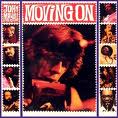
I've been a huge fan of John Mayall's Moving On album for about 35 years. My old roommate Tom could tell you that. It was one of the albums he added to his tape system, and we played it a lot. I still have my vinyl, but it's now out on CD and well worth a listen. The liner notes have interesting comments by Mayall. Fascinatingly, although the original notes say "recorded live at the Whiskey A Go Go, Los Angeles, 10th July 1972", the real story is a little more complicated. It was recorded there originally but, according to Mayall, the tapes had a buzz that rendered the whole date unusable. He reassembled the band in the studio and recorded the whole album again, splicing in applause from the original tapes. As Mayall note wryly, "We didn't just decide to lift the audience from someone else's show, if you're wondering!"
I think this album is as good a way to get some people into jazz as Kind of Blue. With a lineup of Blue Mitchell, Clifford Solomon, Charles Owens, the legendary Fred Jackson, Ernie Watts, Freddy Robinson, and Victor Gaskin, all from the worlds of jazz and blues, plus Keef Hartley on drums, the music rocks and swings like a mother but also has moments of subtlety (check out the flute work of Charles Owens on Christmas 71). The recording culminates in a coruscating tenor solo by Ernie Watts on High Pressure Living. Blue Mitchell is superb throughout, and Freddy Robinson demonstrates his ability to play blues guitar in any setting.
You can find this CD for sale on Amazon, although I got mine via Dusty Groove, that indispensable source for obscure jazz, R & B, funk, and miscellaneous soulful sounds. For a taste of Moving On, go here.